Showing posts with label Info. Show all posts

Thursday, 9 May 2013

How Not To Look Stupid On Twitter

Image (1) with-stupid-mug-2.jpg for post 282644
When the AP Twitter stream was hacked a few weeks agoleading to a massive drop in the equities market, I went off. I found the fact that the AP – a news organization staffed by intelligent people and with a long history of adapting to new media – could be hacked through a phishing attack was unconscionable. It would be like Bank of America being hacked by a group of script kiddies.

Sadly, this happens over and over. Why? Thankfully the folks at the Onion had the foresight to explain what exactly happened when the “Syrian Electronic Army” “hacked” their Twitter stream.

If you run your company’s social media account, read it. The takeaways are here:
Make sure that your users are educated, and that they are suspicious of all links that ask them to log in, regardless of the sender.The email addresses for your twitter accounts should be on a system that is isolated from your organization’s normal email. This will make your Twitter accounts virtually invulnerable to phishing (providing that you’re using unique, strong passwords for every account).All twitter activity should go through an app of some kind, such as HootSuite. Restricting password-based access to your accounts prevents a hacker from taking total ownership, which takes much longer to rectify.

If possible, have a way to reach out to all of your users outside of their organizational email. In the case of the Guardian hack, the SEA posted screenshots of multiple internal security emails, probably from a compromised email address that was overlooked.

I think the third suggestion is the most important – always change your Twitter password on a regular basis and, more important, never ever ever ever click on a link that suggests you should change your Twitter password via the browser. If you must change your Twitter password, either do it through Twitter.com directly or, barring that, email Twitter. If you’re the AP or the ACLU or the Boston Pony And Terrier Lovers Of America Club, I’m sure they’ll help out.

Twitter itself needs to offer dual factor authentication or, at the very least, send you a text when someone changes your password. This is imperative. Twitter is now a medium for corporate communications and for it have the security of a web forum is unconscionable. The person in charge of your Twitter feed should also have a completely separate email address, outside of your domain, and that person should have a process in place to check the URL of the password change page and then only change the password if everything is kosher. At the risk of raising script kiddie, I would say that most “hackers” depend more on the stupidity of their marks and less on their technical skill.

Don’t be stupid.

10M Downloads!! BlueStacks Takes On OUYA With Game Console And $6.99 All-You-Can-Play Service

GamePop Console
BlueStacks, the startup known for bringing Android apps to PCs and Macs, has been growing like a weed. Last week, the company announced that it had passed the 10 million user milestone, nearly half of which were added in the first quarter of this year. Today, hot on the heels of the news that OUYA has landed $15 million from Kleiner Perkins to bring its affordable, $99 Android-friendly gaming console to the masses, BlueStacks is firing back with some news of its own.
Looking to tap into a huge new audience, BlueStacks is today bringing those 750K-plus Android apps not just to PCs and Macs, but to TVs as well with its own gaming console and subscription service. The new package, called “GamePop,” includes a custom console and game controller for free, as part of its $6.99/month service. Well, actually, the console is free through the end of May, at which point BlueStacks will slap on a price tag.
The price of the console has yet to be determined, but the company tells me that GamePop has an “estimated value of approximately $100,” so one can probably expect the pricing to fall in that range — or five times that, depending on how saucy BlueStacks is feeling. Of course, $100 is the “estimated” value, and gamers can get their hands on the whole package for $84 (for a year of the service) now, so take that for what it’s worth. After May, it will probably be more like $184 for 12 months of gameplay.
Right now, gamers can pre-order GamePop from BlueStacks’ homepage (which redirects to gamepop.tv), with consoles expected to ship this winter. Naturally, for this early flight, BlueStacks is selling GamePop exclusively through its own site, but after the first round of shipments, likely beginning next year, expect GamePop to begin showing up in stores.
As for who is responsible for manufacturing and producing BlueStacks’ new gaming console, the company isn’t revealing the man behind the curtain yet. But considering the startup has already struck distribution agreements with several recognizable names in the PC ecosystem, like Intel, AMD, Asus, MSI and Lenovo, it’s probably safe to say that at least one of those companies played a hand in the design, production and distribution. Asus, for one, has the most Android experience, but that’s just speculation at this point.
BlueStacks unveiled GamePop at GDC, allowing developers to take an early look at the gaming service, but has yet to put any in the hands of either developers or reporters. Though, from the looks of it, the industrial design appears to bear some resemblance to D-Link’s Boxee Box.
In the big picture, with today’s announcements, GamePop and OUYA seem to be proving that there’s plenty of demand out there for an affordable gaming console. As Jordan said this morning, OUYA very deliberately set its price at $99 and will be offering games on a “free-to-try” basis, which founder Julie Uhrman says is a core tenet of OUYA itself. Unsurprisingly, that’s resonated with people.
OUYA has seen more than 12,000 developers sign up for its platform, 4,000 of which have signed up since March. What’s more, GameStop, Best Buy and Amazon have already agreed to sell its console, with availability expected to begin in late June. That gives the Kickstarter-born open console a head-start on GamePop in terms of availability and distribution partnerships. And, depending on the price of games after trial, a price advantage, too. So, depending on OUYA’s success this summer and fall, it wouldn’t be surprising to see BlueStacks tweak its pricing accordingly.
With some competition afoot, BlueStacks will be trying to incentivize potential customers with its content deals, which include a handful of top game developers, like Glu Mobile, Halfbrick and OutFit7, for example, as well as Intellijoy, Deemedya and Droidhen. More will be announced over the next few months, the company tells us.
The announcement of GamePop follows the startup’s move in February to bring its App Player software to Surface Pro PCs and other devices running Windows 8. BlueStacks’ arrival on Windows 8, combined with its existing deals with AMD, Asus and Lenovo, will see its software preloaded onto over 100 million PCs over the course of the year, which could potentially help BlueStacks find a reach and scale that’s unusual for a startup — in software or gaming.
For more on GamePop, find the intro video below:

Wednesday, 8 May 2013

Google Glass: What you can and can’t do

This summary is not available. Please click here to view the post.

Google Glass before and after

antarctica8-1
Whether or not you think that Google Glass is something that you’d wind up using one day, you have to admit that the technology is impressive. Packed inside of the pair of specs is a computer running android, camera and all of the wireless capabilities you’d need. The idea of wearable computers is nothing new, and a team that explored Antarctica actually had their own pair of “Glass” long before it was en vogue.
In a blog post chronicling the team’s experience, Tina Sjogren fondly remembers what it was like to pull together a wearable computer running Windows 98, paired with a “finger” mouse for controls and a glass screen as its display. It sounds a lot like an early version of Google Glass, but this was truly a technological marvel, considering that it was built and used at the South Pole in 2001.
The specs of the device, which was called “South Pole Wearable,” are nothing short of amazing, including custom built software to share information and post photos. It was also solar powered, something that Google Glass could really use. It didn’t use 3G, 4G or WiFi, relying on satellites:
antarctica11
Finger Mouse
Wrist Keyboard
HUD (VGA Heads Up Display, Eye-trek Glasses by Olympus)
Wearable Windows 98 computers
Daylight flat panel display
Customized Technology vests
Shoulder Mounted Web Camera
Bluetooth near person network
Iridium data over satellite
Power converters
Solar cells
Control and Command voice software
CONTACT blogging software
Image editing, word processing
The entire kit weighed 15 pounds, which is almost double what the original Google Glass prototype weighed, about 8 pounds. It now weighs about as much as an average pair of sunglasses.
antarctica5Tina and Tom Sjogren set forth to build something that allowed them to transfer all types of information as they skied through the snowy South Pole. Sharing this type of information in real-time was not something that many could wrap their brains around, therefore the pair didn’t get the type of attention for their device that Google is getting for Glass today. Tina says:
We wore a computer on our hips, a mouse in our pocket, and the glass was our screen. We did it not to show off but because we had no other choice.
She also sees a future for Google Glass and regular consumers: “New technology often needs time to catch on and I can see a future for Google glass today. It will come down to how sleek and useful they are. A stylish design paired with all the wonders of augmented reality – what’s not to love?”

“COOL, MAYBE THE TIME HAS COME FOR THIS TECH”

Wearing Google Glass wasn’t the experience that Tina and Tom had back in 2001, as Tina refers to their display as “too bulky to wear all of the time.” The eye piece on their device had greenish text which, much like Google Glass, didn’t obstruct your view. It even had voice commands. The two even slept in their gear at nights, to keep it warm and protect it from the elements. In 2002, they became the first to broadcast live photos and sounds from the Antarctic ice cap.
The trekkers counted on Ericcson as their sponsor during the mission, and here’s a drawing they made of a “future explorer” wearing their device:
antarctica9-1
I spoke with Tina Sjogren today and she told me that the reason for building the device was based on their love of exploration: “Our specialty is to find and marry software and hardware for unique situations such as extreme expeditions, military, security and other.” The purpose of building the device was simple, yet profound: “We had a story to tell. There had never been live dispatches done from a skiing expedition on the continent before. We also helped General Dynamics with feedback on how this could work on aircraft carriers.”
Twelve years after the Sjogren team set out on their adventure, Google is trying to make the world around us equally as interesting with Glass. It’s too soon to know whether it will catch on with consumers once they’re made available to people other than developers.
If we’ve learned anything from Tina and Tom Sjogren, it’s that good ideas have this way of coming back year after year, getting better and more polished each time:
glasstoglass
As Google Glass has gotten more publicity, Tina summarized her feelings about it succinctly, capturing the true mentality of someone who loves to see new things, explore new places and share experiences: “Cool, maybe the time has come for this tech.”

HTC First now only $0.99

942199_10151683479869009_1621921612_n
Facebook may be trying to sweeten the deal to get Home into more hands, or AT&T and HTC might just want their money. But for some reason, the Facebook Phone aka the HTC First’s price has dropped from $99 to $0.99 on contract less than a month after its debut. Considering it comes with unbloated stock Android and a speedy LTE connection, that could be a bargain.
Facebook tells me “We think this is a good move by AT&T and have highlighted the new price on our Facebook Mobile Page.” AT&T is also running a discount special on the popular HTC One and Samsung Galaxy S4, so this might not be as much a reflection of the First’s momentum as an overarching move on the carrier’s part. Plus, all phones get price drops eventually.
Facebook has maintained that its committed to working with manufacturers on handsets, so don’t expect this to be the last Facebook Phone. But it seems Home wasn’t a strong enough selling point to convince tons people to buy a phone with a soggy camera – my main gripe about the HTC First. The 5 megapixel lens did a crummy job in low light, and Home buries the controls for the camera making it harder to catch candid shots.

Facebook Phone Price Drop
Less than one million people have downloaded Home for their Android phones, and many fewer may have been willing to pay $99 for a phone with it. But Home will get better, and so will any phone carrying it. As I wrote yesterday, I expect Facebook to address the main complaints about the “apperating system” in its monthly updates. Specifically, I’d bet on a deeper onboarding flow to make Home less confusing, and a way for it to preserve your widgets and homescreen app folders rather than completely replacing them as it does now.
If Home improves soon, or HTC releases another version of the First with a better camera, I think sales of the brand could pick up. Facebook might want to draft up some new commercials in the meantime, though,  as the last few made the First and Home seem like a non-stop barrage of interruptions.

Open Source Network Switch Project

opencompute
Open Compute will develop a specification and a reference box for an open networking switch and will do so from the ground up in the fashion of open-source software efforts, such as those developed by the Apache Foundation.
The OS-agnostic, top-of-rack switch will be the first developed as an open-source project with the spec developed by the Open Compute community.
“Closesd switches are still the primary way things work,” said Frank Frankovsky in an interview this week. Frankovsky is a Facebook vice president in hardware design and supply operations who plays a focal role at Open Compute. “…Networking has always had a black box nature to it. You give it a packet and it gives it back on the other end.”
According to a blog post by Frankovsky, Najam Ahmad, who runs the network engineering team at Facebook, will lead the networking project. The Open Networking Foundation and OpenDaylight group will participate with Broadcomm, Intel, VMware, and Cumulus Networks. Work on the project will begin at the first  OCP Engineering Summit, being held at MIT on May 16.
The networking specs will most likely be stripped down, compared to proprietary switches. “Scale is the hardest problem to solve,” Frankovsky said. “Simplicity allows us to trouble shoot faster.”
The network switch will be designed to be independent of the software that runs on top of it. That means customers can configure the technology in the manner that is appropriate for their purposes. The hope is that this “disaggregated,” switch will  allow for a faster pace of innovation. Frankovsky said that Facebook has found networking to be a bottleneck. The proprietary switches are not built for scale. More so they are meant for small clusters. Additionally, changes do not happen fast enough in the switches the network vendors offer. Requests go to the vendor who then prioritizes additions in the  new version.
There have been open-source hardware projects such as Raspberry Pi but none at the data center level. The need for open-source is precipitated by the surging growth of the Internet, which is forcing companies to process ever larger stores of data.
There are some companies not on the list of participants in the project. Dell, HP and Cisco are noticeably not present. My guess is we can expect to see some of those vendors joining in this open-source effort, especially as demand increases for infrastructure that is not locked down in proprietary fashion but is rather more plug and play.

Smart Phone Powered Lock by UniKey


It's not the first time that Kwikset's dabbled in wireless locks, but today the company's introducing Kēvo, a smartphone- (and tablet-) friendly lock powered by UniKey. The concept is pretty simple: pair a handset (running a special app) with Kēvo via Bluetooth, and simply touch the deadbolt to lock or unlock your door. A keychain fob is also available for those who have not yet joined the smartphone revolution. Kēvo only responds to touch when an authorized device or fob is detected nearby. A triple tap lets anyone lock your door, which is useful if a visitor leaves after you. The deadbolt is battery-powered using four AA cells that last more than a year with normal operation. It features a ring of RGB LEDs for feedback and a standard physical key for backup.

Most of the magic is made possible by tech developed by UniKey. The key (natch) to the entire system is the Kēvo app which lets you manage eKeys. Once logged into the app, you can send and delete eKeys, or transfer them to another device (this also deletes the eKeys associated with a lost handset, for example) -- you can even create eKeys that only work once. Currently, the app is only available for iOS, which is a major limitation, but it supports push, email and SMS notifications and keeps a detailed log of which eKeys have accessed Kēvo and when. Pricing and availability remain a mystery, but all in all the system looks pretty neat. Stay tuned for more details, and check out link below.

Sony lifting development license fee on PlayStation Vita


Sony's already got a low barrier to entry for developers on its PlayStation Mobile platform, which encompasses the PlayStation Vita handheld game console and a variety of smartphones -- just $99 for a license enables publishing across all PlayStation Mobile devices. Apparently that fee is too much for some folks, so Sony's waving it altogether. Starting right now (as of yesterday, actually), Sony's "removing any existing barriers" between developers and the PS Mobile platform by dropping the publishing fee, thusly making it all the easier for devs to push their games to the Vita and various smartphones. There are already some great indie games featured on Sony's PS Mobile store, including Vlambeer's Super Crate Boxand Super Icon Ltd.'s Life of Pixel, and this paves the way for even more.

Of course, Apple's iOS publishing fee is $99 per year and the App Store is certainly more flush with content than Sony's Mobile store, which tells us it isn't the license fee that's stopping people from pushing their games to PS Mobile.

Nokia Investors Are Sick Of Waiting Around For Changes, Want To Leave Microsoft


Nokia Investors
Nokia investors told Chief Executive Stephen Elop on Tuesday that they were running out of patience with his flagging attempts to catch up with market leaders Apple and Samsung in smartphones.

Many shareholders at the annual general meeting in Helsinki said Elop should reconsider his 2011 decision to switch to the phone operating software made by his former employer Microsoft, which has left the company scrambling to get back in the race from a standing start with its new Lumia range of smartphones.

"You're a nice guy ... and the leadership team is doing its best, but clearly, it's not enough," one shareholder, Hannu Virtanen, told Elop. "Are you aware that results are what matter? The road to hell is paved with good intentions. Please switch to another road," he said.

The transition to Windows Phone from Nokia's own Symbian system was meant to take two years. That period is now over, and while recent results have shown growth in sales of Lumia smartphones using Windows Phone 8 software, the volumes pale in comparison with the top Samsung and Apple models, and sales of its regular mobile phones have plunged in the meantime.

Nokia shares have also plunged, now trading at 2.72 euros, a fraction of their 65-euro peak in 2000.

Asked why they still held Nokia stock despite poor results and a suspension in annual dividends, some older attendants at the AGM admitted to being sentimental about a firm that symbolized Finland's rebirth after the collapse of the Soviet Union in the early 1990s, its main trading partner.

Institutional investors have been less willing to cling on; Finnish pension fund Ilmarinen, its second-largest shareholder, recently revealed it had cut its stake by 27 percent in the first quarter.

NO PLAN B

Elop on Tuesday reiterated the company's commitment to Windows Phone software.

"We make adjustments as we go. But it's very clear to us that in today's war of ecosystems, we've made a very clear decision to focus on Windows Phone with our Lumia product line," he said. "And it is with that that we will compete with competitors like Samsung and (Google's operating system) Android."

Juha Varis, senior portfolio manager at Danske Capital, which owns Nokia shares, said Elop may be making a mistake.

"He has closed doors," he said in a phone interview. "They don't have new ideas now. Their fate is all in Windows Phones."

Some analysts have also been critical, saying Lumia sales were not strong enough to ensure the company's survival.

Nokia sold 5.6 million units of Lumia handsets in the first quarter. That was up from 4.4 million in the previous quarter, but its market share was still only about 5 percent, with Apple and Samsung together controlling over half the market.

"He's managed to decrease costs but not to increase market share," said Magnus Rehle, senior partner in Greenwich Consulting, which advises telecoms companies.

"Maybe they could go back to Google and say we also want to go with Android. Even if it hurts. Microsoft, they've had their chances, and are not managing to take off," he said.

CHEAPER SMARTPHONES

In the absence of a Plan B, analysts said Nokia's best bet would be to focus on selling cheaper smartphones, or feature phones with some smartphone capabilities such as its higher-end Asha handsets, in emerging markets.

Sources also say it will soon begin selling new, higher-end Lumia phones through Verizon Wireless in addition to its current partnership with AT&T.

But few expect it to help Nokia gain significant share in the U.S. smartphone market any time soon.

"Their best chance of success isn't going head to head with Apple. We think it will be in the mid-range," said Morningstar analyst Brian Colello in Chicago.

"That's $300 rather than the $600 models. That's where customers in emerging markets and first-time buyers will be looking."

Analysts were more hopeful about prospects for Nokia's Lumia 521, a low-end smartphone, due to go on sale at Walmart later this month at an unsubsidized price of under $150.

"They've lost the battle in expensive smartphones to Apple and Samsung. And at the low end, they have very strong competition from the Chinese. But there's still a possibility to fight in emerging markets," Rehle said.

Elop said Nokia would announce new Asha models soon. He is due to attend a news conference in New Delhi on Thursday.

The Android Tablet That Wants To Be Your Backcountry Buddy: EARL

earl-tablet
Sure, your Android tablet probably works like a champ when you’re splayed out on the couch, but is it one of your go-to gadgets for when you go traipsing through the great outdoors. I’d wager not — they tend to be a little fragile — and that’s why the folks at Seattle-based Sqigle is looking to a bring a curious tablet named Earl to market.
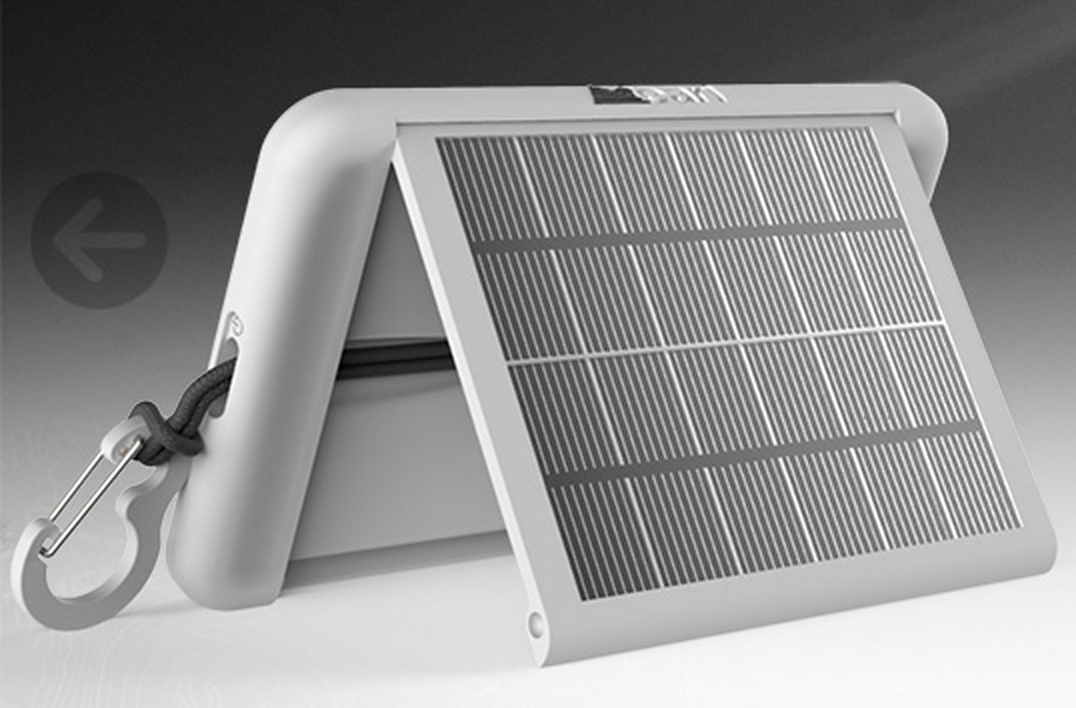
As you might’ve guessed, Earl isn’t your ordinary Android tablet — the team refers to it as the world’s first “backcountry survival tablet,” and it has a prospective spec sheet that certainly lives up to the name. It sports a 6-inch frontlit e-ink display from LG for one thing, as well as an IR touch array (so you can operate Earl with gloves, naturally), and a flip-out solar panel for on-the-go charging, all encased in a 0.6-inch thick water and muck-resistant chassis.
earl-solarWhere Earl really seems to shine is its approach to connectivity. It comes with your usual loadout of Wi-Fi, Bluetooth, and NFC radios, but once complete Earl will let users listen to AM/FM broadcasts as well as tap into shortwave and long wave frequencies.
Throw in the ability to use Earl as a two-way radio and preloaded 100k topographical maps of the U.S., Canada and Mexico, and you’ve got yourself quite the survivalist gizmo. The only major omission? There’s no camera to be found here, though it’s not like most tablets fare well on that front anyway.
To be quite honest, much of what the team claims Earl will be able to do seems a little outlandish — Sqigle’s early renders point to a heavily-tweaked version of Android 4.1 running the show, and I seriously wonder whether or not the team will be able to implement some of these features as elegantly as these images portray. That said, I can’t help but hope Sqigle makes good on all of it. All told, the team is looking for $250,000 to take the Earl from 3D printed prototype to full-fledged backwoods companion, and the outdoorsy types among you can lock down an Earl of your own for $249. If all goes well, Sqigle founder Jonathan Perry hopes to kick off the production process in earnest in July, with the first units hitting backer doorsteps by the end of the summer.

Google Makes Its Customizable Apps Admin Console Available To All Customers

2868168916_1ab1970cdb_z
Today, Google announced the eventual rollout of a brand new look for its Admin Console, an area that only admins of Google Apps will see. The aim of the redesign is to help those admins get to information quicker, manage user accounts easier and keep their company running as smooth as possible. The company boasts that “millions” of businesses, schools and government agencies are using Google Apps, so making sure that the Admin Console is as easy to use as possible is key to getting buy-in.
According to the Admin Console FAQ, this new look has been available for new users as of April 17th, but this announcement signals the invitation to all customers.
Some of the things being introduced to the Admin Console, which rolls out in a few weeks, are a universal search bar, new usage and activity stats at a glance, some bulk user actions and a customizable dashboard. The dashboard will let admins drag-and-drop the areas of Apps that they use the most, making it easier to do things like add new users or help employees out with password issues:
image-2
Additionally, and while this might seem minor to most of us, the Admin Console now lives at an easier to remember URL, admin.google.com. That’s one of those tweaks that makes you wonder why it took so long.
Here’s a complete demo of what’s new in the Admin Console:
[Photo credit: Flickr]

Open-Source Game Controller Case For iPad Mini

webdesign1-1
The iPad mini is a unique device in that it offers much more portability than the standard iPad, while still providing a much bigger screen than the iPhone for more enjoyable gaming. Techdy has recognized that as an opportunity to build agame controller specifically for Apple’s smaller tablet, which aims to turn it into a much more capable gaming rig.
The Game D is a controller designed with a standard physical d-pad and four-button arrangement, as well as start/select buttons. The controller is designed to fit inside a slim aluminum shell, not unlike Logitech’s Ultraslim Keyboard for iPad mini, and it also uses magnets to operate. It can be used in two gaming positions, either with the iPad mini mounted in a slot on the keyboard itself, or snapped magnetically to the back of the iPad, for a more traditional gaming layout. Plus, it doubles as a smart cover.
Techdy is looking to crowdfund the development of the Game D, with its own self-run campaign. Reservations for the Game D start at $39, and there’s a Pro version upgrade available for $59 that adds backlit keys, vibration feedback and two analog gamepads. There’s also a Nexus 7-specific model available for Android gamers.
A lot of aspects of the Game D’s eventual design and branding are still up to backers, including its final shipping product name (“Game D” is just a placeholder) and custom color choices, as well as app interfaces for controlling the hardware itself. The development for the Game D is progressing nicely, with a working hardware prototype designed to function with iCade-compatible games, according to co-founder Cyril Chang. He also says that they’ll eventually offer their own open-source game developer kit (GDK), as well as continue to support iCade games at launch.
I’d love a gamepad for my iPad mini, even if it might be a little more taxing on the forearms and biceps than using an iPhone. Techdy hopes to ship these in August of 2013, if it meets its $500,000 target funding goal by the middle of May.

Facebook Acqhires Team From HTML5 Game Platform Spaceport.io, Which Will Keep Running

spaceport-logo-platform
Spaceport.io has just announced that part of its team, but not its technology, is moving to Facebook, and the social network has confirmed the talent deal to me. But instead of shutting down, Spaceport.io will continue to operate its Adobe Air alternative under the direction of co-founder Peter Relan and the team from his incubator YouWeb that backed Spaceport.
The Spaceport team including Ben Savage(not the actor from Boy Meets World) could help Facebook build better cross-platform mobile experience for itself and its third-party developers. Facebook tells me “Ben Savage and the Spaceport team are a talented group of mobile engineers. We look forward to building products that people love together.” Spaceport was originally founded as Sibblingz Inc by Savage and Relan within the YouWeb incubator. It raised $3 million in April 2012 from BBC Worldwide and YouWeb.
Spaceport Vs Adobe
For a remarkably clear, no bull , one-minute description of what Spaceport does, check out this video. But as our writer Leena Rao put it in 2011, “Spaceport allows game developers to build a game once, using Javascript, and have it play across all smartphone operating systems, with a native app-like experience and fast performance. The games run as a hybrid HTML5 – native app, and the code for the game is written once, in a simple scripting language, so that they can then run on any device. With Spaceport, developers just need to revise the JavaScript code for their game in the HTML page once. After doing so, they will see immediate updates take place in their game across every device.”
Developers will still be able to build on the YouWeb-supported Spaceport platform. Some early users of the platform include Nickelodeon, and social game heavyweight Crowdstar, who used Spaceport to build its hit game It Girl.
So how does the Spaceport team help Facebook? The social network launched an HTML5 game platform in late 2011 but it’s gotten very little traction. Developers seem to prefer building native apps that have more access to a mobile device’s hardware and that can handle better graphics. The Spaceport team could help Facebook build out that platform so it’s suitable for serious apps.
Alternatively, the Spaceport team might aid Facebook with porting its own rich native apps to the mobile web via HTML5. Facebook famously backtracked on the mobile web standard after spending years building its iOS and Android apps on the architecture. It eventually realized HTML5 made the apps run too slowly, so it rebuilt them 100% native. Spaceport could allow the Facebook mobile team port its native apps to HTML5 so all the code doesn’t have to be rewritten. That could let Facebook continue shipping mobile products quickly so it doesn’t get picked apart by more nimble, mobile-first startups.
Spaceport

Nintendo Offers Smartphone App Porting Tool

AWKWARD-MARIO
Nintendo is trying to get people to buy the new Wii U, but it just isn’t working, according to recent sales numbers. Now, the Japanese gaming giant is hoping that helping developers port their smartphone content to the home gaming console with conversion software will help entice buyers, according to the Japan Times.
Smartphone apps on a home console isn’t a novel idea: Sony began encouraging devs to bring their mobile phone hits to the PlayStation network a while ago, and continues to add mobile-first titles to the ranks of the Vita’s portable library. But there’s nothing really indicating that’s making a major difference in terms of attracting customers. After all, why would people seek out those titles on consoles, portable or otherwise, when they’ve already got myriad devices to play them on natively, including the iPhone, Android smartphones and the iPad?
Nintendo looking for ports of smartphone titles is a quick and dirty way to build out a larger software library, and for developers, a way to at least explore a new delivery vector to reach customers they may not already be reaching. But it will probably be a limited audience, made more so by the fact that anyone who’s already a fan of the title on mobile would probably be disinclined to pay for it all over again.
Porting is also a strategy that hasn’t really seemed to have been successful for anyone so far. BlackBerry has encouraged developers to port their Android apps over to BB10 using its own super-simple tool, which by all accounts takes only a few minutes to do its magic. But even still, it’s finding it hard to get developers on board, and that’s going from one mobile platform to another. Incentivizing conversions for mobile devs to bring their titles to a home console will likely be tricker still.
It’s been brought up before, but it bears repeating: Nintendo would probably stand to gain a lot more by reversing the situation, and porting its own blockbuster titles to other platforms, the way that Sony has flirted with doing, and the way that other publishers like Square Enix and Capcom have fully embraced. Admittedly, neither of those are hardware makers like Nintendo, but arguably that makes things more imperative for the Mario creator, which is having a really rough go of its hardware efforts, with lots of money sunk into a brand new console just at the beginning of what has been a 10-year release cycle in the past.
I wouldn’t mind having something like Dots on my Wii U, if I had or cared about one, but it’s not going to convince me to go buy that console. On the other hand, I’d love Super Mario World on the iPhone (a legit version, not via emulator) and would pay dearly for the pleasure. You’ve got the funnel all wrong, Nintendo, and it isn’t going to bring the people back.

Rovio Is Finally Introducing A Way To Sync Your Progress In Angry Birds And Other Games Across Devices

angry birds hd on ipad
Angry Birds maker Rovio today finallyintroduced a way for users to save their gameplay and progress in the cloud, and then resume play on any device. Called simply “Rovio Accounts,” it’s a feature which has been in such huge demand that fan communities like the officially sanctioned Angry Birds Nest had previously drummed up complicated, multi-step workarounds to solve the problem.

In a brief announcement on Rovio’s site, the company reports that the Accounts feature is first arriving in the new The Croods game worldwide, and in the classic version of Angry Birds on iOS in Finland and Poland. The continued worldwide rollout to other titles and markets will happen “gradually,” explains the post.

Registering for a Rovio Account will be an optional feature, and it will support transferring progress to new devices, such as when you upgrade your phone, or to enable continued gameplay on other devices you may currently own. In addition, the feature will also allow several users to share a device, each with their own saved game.

If you’re already playing multiple games on several devices, upon first sign in on each, you’ll be asked if you want to merge the scores, stars and feathers into your current account. However, power-ups will continue to be stored per device, explains a Rovio FAQ.

To get started, after registering, you’ll need to verify your email within 48 hours to confirm your account.

Rovio didn’t offer any details as to when it expects the Accounts feature rollout to complete worldwide, but it’s no small undertaking given the size and scope of its current lineup. In the past year, the company launched Amazing Alex, Bad Piggies and Angry Birds Star Wars, which in addition to Angry Birds Classic, Friends, Space, Seasons, Rio, and The Croods, accounts for 263 million active monthly users.

In more recent months, the company has been shifting towards making some games free, such as when it offered the original Angry Birds game for free this March. The new Accounts feature will now help with these efforts to draw in both new lapsed users who have since moved on from the device where they had first installed the paid Rovio titles.

Labs of the heroic age of science


On IO9, Vincze Miklós has rounded up a beautiful gallery of photos of vintage science labs, from the Renaissance to Pasteur and Edison and ENIAC. Labs like these are the source of the shared dream of what science looks like that dominates our contemporary consciousness, even though most labs today look very different (science, like many other tasks today, looks like: a person with headphones and bad posture typing at a laptop and periodically clutching at her wrists).

Looking for mathematical perfection in all the wrong places


The Golden Ratio — that geometric expression of the Fibonacci sequence of numbers (1, 1, 2, 3, 5, etc.) — has influenced the way master painters created art and can be spotted occurring naturally in the seed arrangement on the face of a sunflower. But its serendipitous appearances aren't nearly as frequent as pop culture would have you believe, writes Samuel Arbesman at The Nautilus. In fact, one of the most common examples of mathematical perfection — the chambered nautilus shell — actually isn't. Even math can become part of the myths we tell ourselves as we try to create meaning in the universe.

Microscale 3D printer

German start-up Nanoscribe is commercialized a 3D "micro printer"that uses a near-infrared laser to print tiny structures with features as small as 30 nanometers. (A human hair is roughly 50,000 - 100,000 nanometers wide.) The device uses an infra-red laser beam moving in three dimensions to solidify a light-sensitive material into the desired shape. The additive manufacturing system, much faster than existing technology, could be used to "print" the components of medical devices, electromechanical systems, and, er, robot models that would fit on the head of a pin. "Micro 3-D Printer Creates Tiny Structures in Seconds" (Technology Review, thanks Anthony Townsend!)

German children use bundled inflationary money as blocks, 1923


Here's a little visual aid for any inflation hawks out there who're looking for just the right graphic to stick in a powerpoint decrying stimulus packages or extolling gold's virtue: a group of Weimar-era kids using bundles of devalued Deutsche marks as building blocks.

German children using marks as building blocks, when Germany tried to pay its war debts by printing money, causing hyper-inflation. 1923. (via Dark Roasted Blend)


I write books. My latest is a YA science fiction novel called Homeland (it's the sequel to Little Brother). More books: Rapture of the Nerds (a novel, with Charlie Stross); With a Little Help(short stories); and The Great Big Beautiful Tomorrow (novella and nonfic). I speak all over the place and I tweet and tumble, too.

Easy Tips for A Great Career

Today, India is one of the fast growing economies. As a result of this job market is expanding. Unfortunately, not many engineering graduates are grabbing the job opportunities as their proficiency level in English is not up to the mark. Students of engineering shouldn't be satisfied with just math, thermodynamics, alkali, chips and transistors. They must work on enhancing their English language skills, communication skills, and soft skills. The engineers to-be must focus on improving their command over grammar, comprehension, report writing, seminar presentation and interview techniques etc. Effective English communication skills are vital to engineering students to enhance their academic performance, employability and personal effectiveness. 

Today's job industry wants students who have good communication skills and a dynamic personality. Organizations look for people who can work in teams and who can get along with their colleagues comfortably. Employers are keen on recruiting only those students who possess a right mix of technical skills and soft skills. Hence, it is high time students realized that communication skills in English and soft skills play a pivotal role in their personal as well as professional lives. 

Featured Links